Velvet is the fabric people are most frightened of, and they are right to be careful. The pile is a forest of short upright fibres, and what you see is not really colour — it is light bouncing off the direction those fibres are lying. Crush them, wet them unevenly, or dry them the wrong way and you get shading: permanent-looking light and dark patches that have nothing to do with dirt.
That is why a wet cloth on velvet so often makes things dramatically worse. The mark comes out, and in its place you have a pale halo twice the size that will not brush away.
Crushed velvet, which is in half the London living rooms built in the last decade, adds a twist: the pile is deliberately laid in random directions, so it hides soil brilliantly until it is saturated, and then it shows everything at once.
What a velvet sofa cleaning visit includes
- Pile-direction mapping before any moisture is introduced
- Dry soil extraction with a low-suction upholstery tool so the pile is not pulled
- Low-moisture cleaning, applied to the fibre rather than flooded through it
- Marks worked from the outside inward to prevent halo rings
- Pile groomed back to a single lie while damp
- Controlled drying so the nap sets in the right direction
Shading, watermarks and the halo ring
Nearly every velvet job we are called to has at least one home-made watermark on it. The story is always the same: someone spilled something, dabbed at it with a damp cloth, and the spill vanished while a grey ring appeared. The ring is not dirt. It is the boundary where the fabric dried last, carrying soil and any dissolved finish with it to the edge of the wet area.
Those rings come out, but only by re-wetting the whole panel evenly and drying it as one — which is exactly the opposite of what instinct tells you to do. That is the single best reason to leave a velvet spill alone and call someone rather than attack it with a cloth.
Genuine crush damage, where the pile has been physically flattened by weight over years, is a different case. Steam and grooming lift a lot of it. On an old sofa with a permanent sit-mark, expect a real improvement rather than a factory finish, and we will say which one you are looking at before we start.
Velvet sofa cleaning: before and after
Real customer jobs. Drag the handle to compare.
Polyester velvet versus the real thing
Most modern British sofa velvet is polyester, sometimes with a cotton backing. It is durable, colourfast and forgiving, and it takes a proper clean well. Silk, viscose and cotton velvets are another matter — viscose in particular loses wet strength and can crush permanently, and a great deal of "luxury" crushed velvet is a viscose blend.
We check the composition tag and run a moisture test on a hidden seam. Where a fabric reads as viscose-heavy, we drop to a dry-solvent or very-low-moisture method that costs the same and protects the pile.
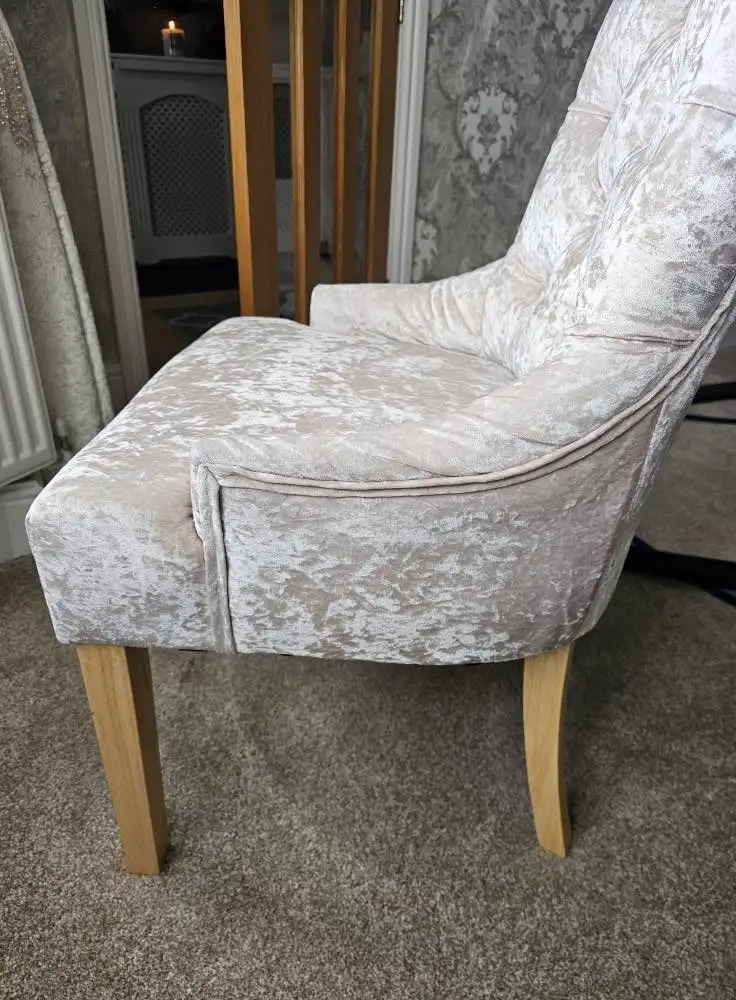
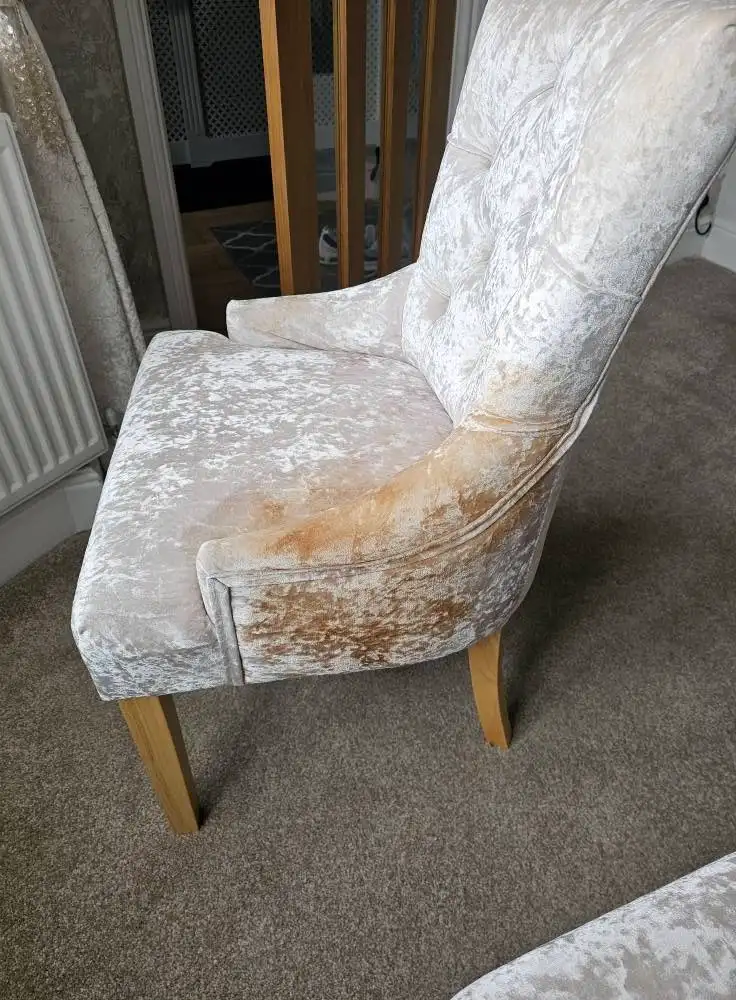
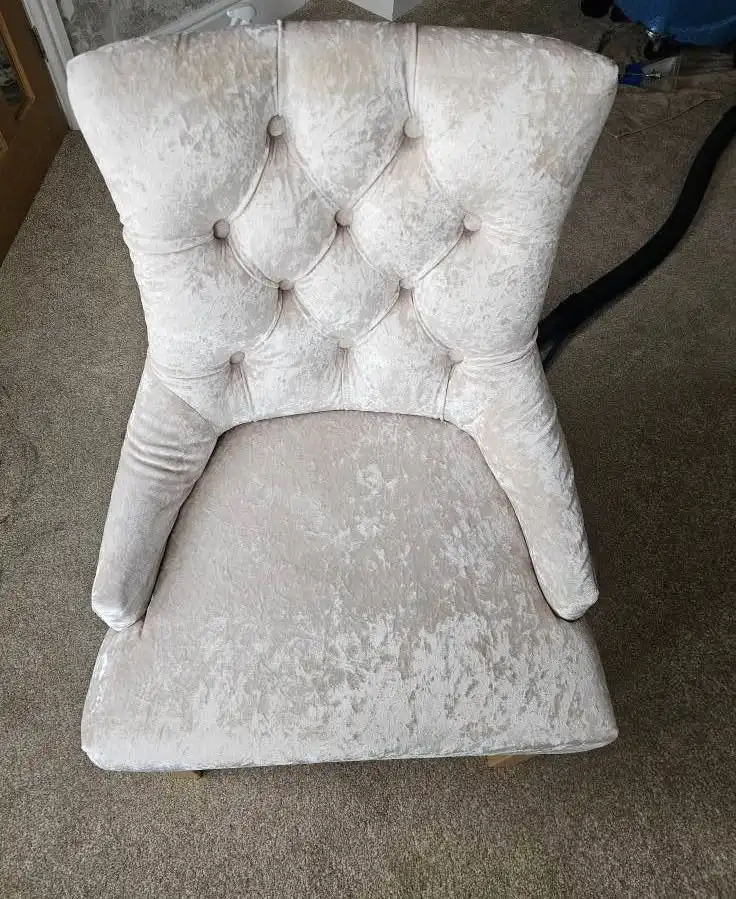
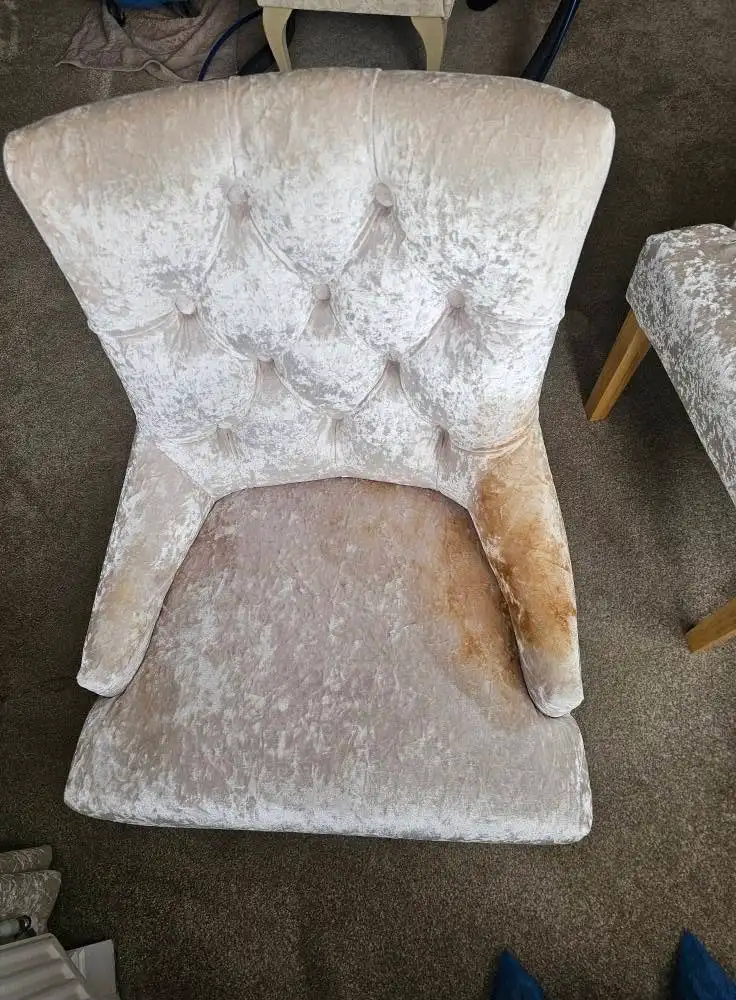
The cream crushed-velvet accent chairs in our before-and-after gallery are a typical example: heavy tan soiling on the arms and a greyed seat pad, cleaned back to an even pale pile with no shading, watermark or crush.
Velvet sofa cleaning prices
Typical ranges for this service. Where your job sits depends on size, fabric and condition — send a photo on WhatsApp or call and we will agree your exact price before you book.
| Item | Typical range |
|---|---|
| 2-seater velvet sofaLow-moisture method | £65–£95 |
| 3-seater velvet sofaLow-moisture method | £80–£115 |
| Velvet accent or dining chairPer chair | £18–£30 |
| Velvet headboardButtoned or panelled | £40–£65 |
Velvet is priced the same as fabric — the method differs, the cost does not. Final price confirmed when we speak.
Estimates, not final quotes. These are guide ranges based on typical London rates. A smaller or lightly soiled job can come in under the range, and a big or badly soiled one can sit above it. We agree your actual price with you on the phone or on WhatsApp before anything is booked.
See the full price list for every service.
Where we do most of this work
Velvet sofa cleaning is one of the most requested services in these boroughs. Each page covers local access, parking and housing stock.