Stairs are the hardest-working carpet in a house by a wide margin. Every journey through the property crosses them, the whole load lands on the nosing — the front edge of each tread — and there is nowhere for the soil to spread out. That is why a staircase can look filthy while the landing at the top of it still looks fine.
They are also the most awkward thing in the trade to clean properly. A wand does not fit a tread. Risers are vertical, so anything over-applied runs. Spindles and strings mean the edges cannot be reached in a straight pass, and the nosing needs more work than anything else while being the easiest place to over-wet.
It is hand-tool work, step by step, and it is where the difference between a professional clean and a hired machine is most visible.
What a stairs & landings visit includes
- Every tread, riser and nosing worked individually with a hand tool
- Edges, strings and around spindles reached with a crevice tool
- Heavy pre-spray and dwell time on the nosings before extraction
- Controlled moisture on risers so nothing runs down the face
- Landings and half-landings included in the hall-stairs-landing price
- Stairs left walkable in socks and dry in two to four hours
Why the nosing is dark and the tread is not
Look at any well-used staircase and the darkest band runs along the front lip of each step. That is where the ball of the foot lands and pivots, so it gets the most pressure, the most abrasion and the most transferred soil in the smallest area. It is also the part with least backing support, so it wears fastest.
Cleaning it takes a longer dwell and more mechanical agitation than flat carpet — but carefully, because a nosing sits over a hard edge and aggressive work on a worn one will fibre-shed. We treat nosings as their own pass before the tread and riser.
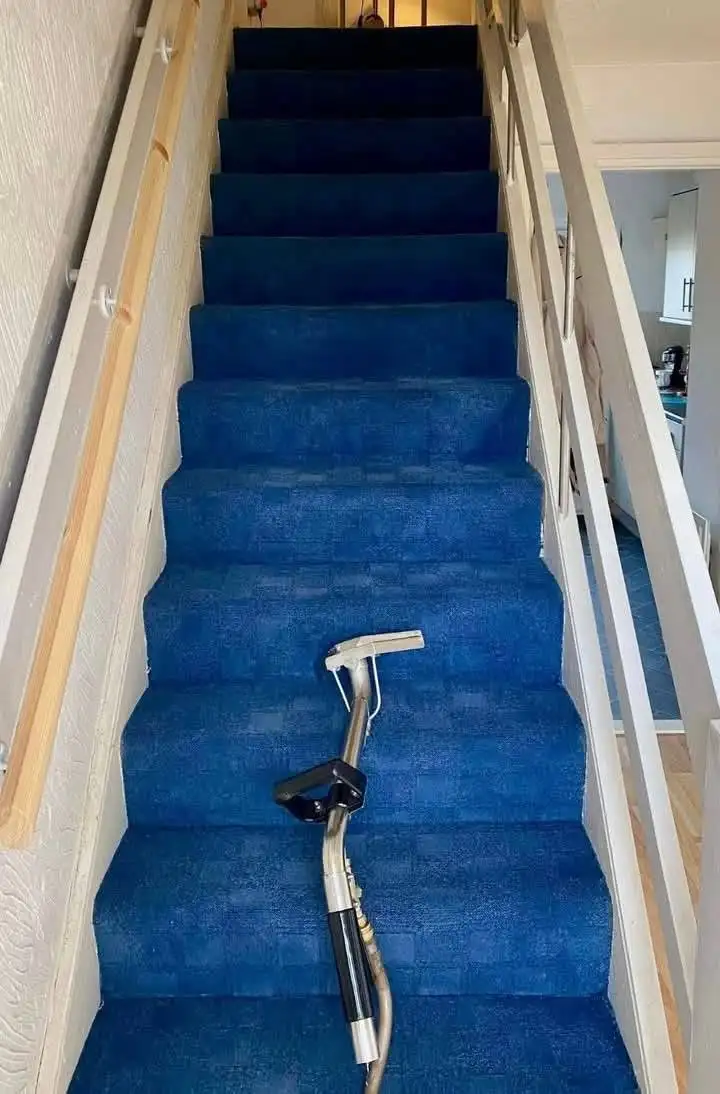
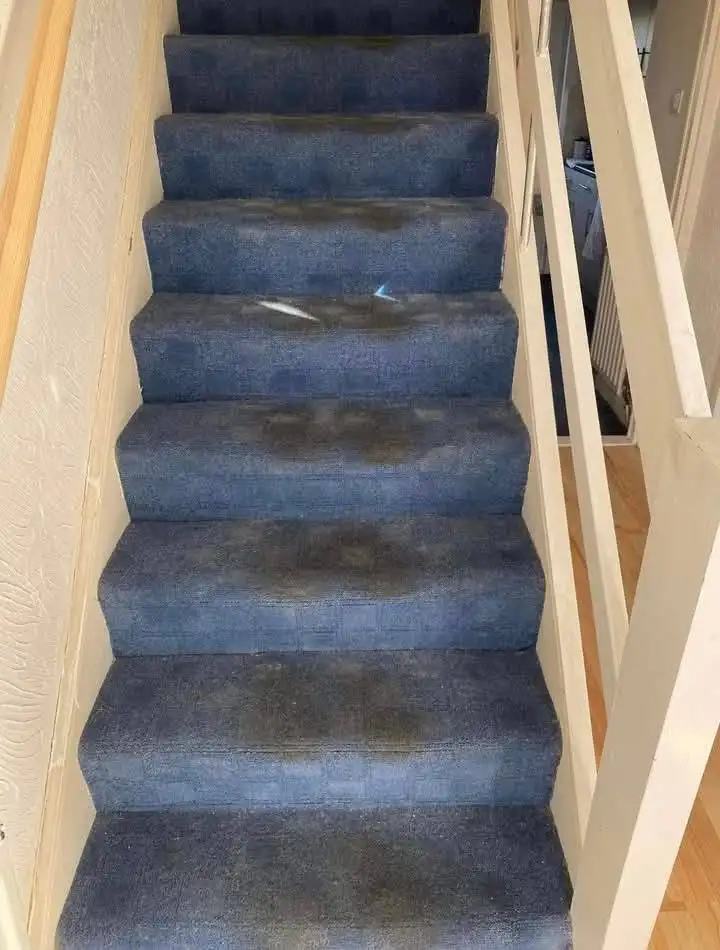
The blue stair carpet in our before-and-after gallery is a textbook case: heavy grey-brown soiling down the centre of every tread with clean carpet at the edges, restored to an even blue. The contrast in that photo is entirely soil removal — no colour was added.
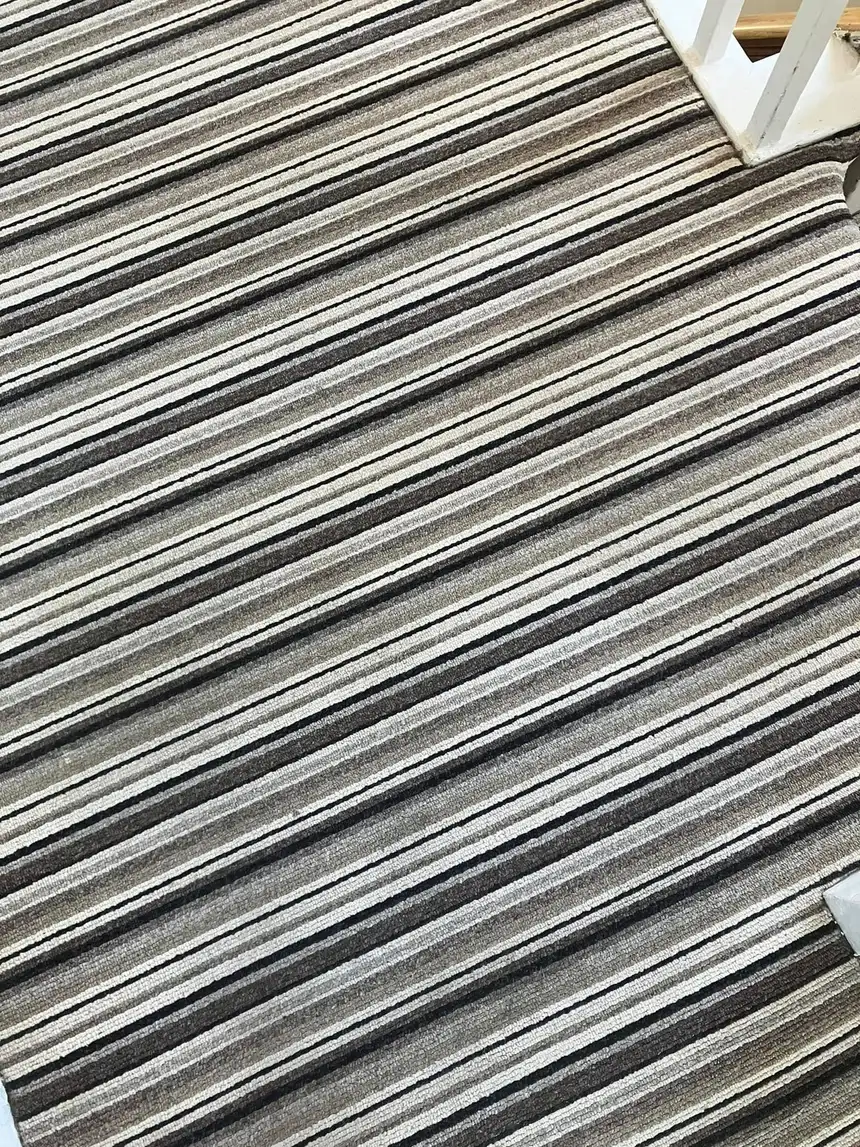
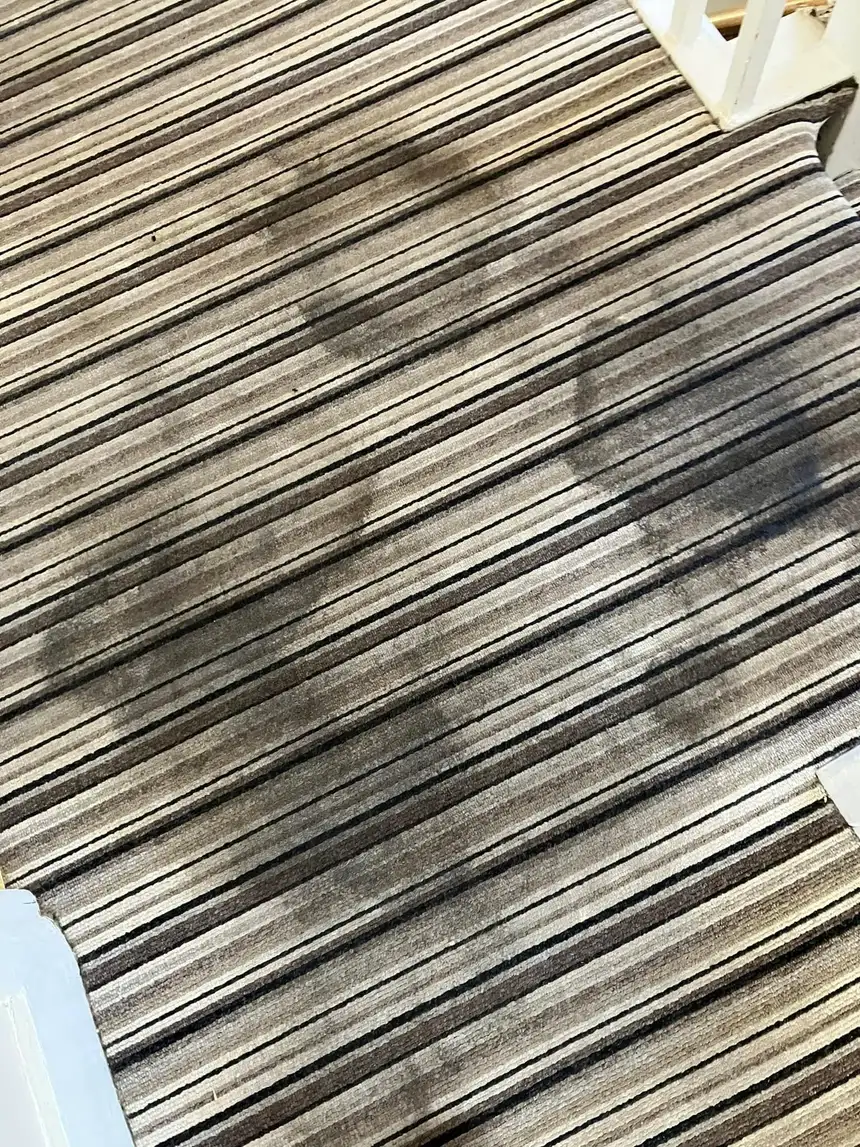
Stairs & landings: before and after
Real customer jobs. Drag the handle to compare.
Runners, fitted stairs and awkward London staircases
Fitted stair carpet is cleaned in place, tread by tread. Runners over timber need more care, because moisture that escapes the runner will mark the wood underneath and lift the finish; we work drier at the edges and protect the exposed timber.
London houses throw up plenty of awkward geometry — winders on a turn, open-tread staircases, steep flights in loft conversions, and basement stairs with no natural light or airflow. Winders take roughly twice as long per step as a straight flight and we allow for that rather than rushing them.
Where drying is a concern, typically an internal staircase with no window, we run an air mover at the bottom of the flight to push air up it. That is usually the difference between two hours and most of a day.
Stairs & landings prices
Typical ranges for this service. Where your job sits depends on size, fabric and condition — send a photo on WhatsApp or call and we will agree your exact price before you book.
| Item | Typical range |
|---|---|
| Hall, stairs and landingStandard straight flight | £70–£100 |
| Stairs onlyUp to 14 treads | £45–£75 |
| Additional flightSecond or loft flight | £30–£55 |
| Winders / turn treadsEach, added to the above | £2–£4 |
Hall, stairs and landing are normally quoted as one package — better value than booking separately. Winders and extra flights move you up the range.
Estimates, not final quotes. These are guide ranges based on typical London rates. A smaller or lightly soiled job can come in under the range, and a big or badly soiled one can sit above it. We agree your actual price with you on the phone or on WhatsApp before anything is booked.
See the full price list for every service.
Where we do most of this work
Stairs & landings is one of the most requested services in these boroughs. Each page covers local access, parking and housing stock.