Method
How we actually clean things
There is no secret product. There is a sequence, and the discipline to do all of it every time — which is the part that separates a result you notice from one you do not.
Most of the dirt is dry
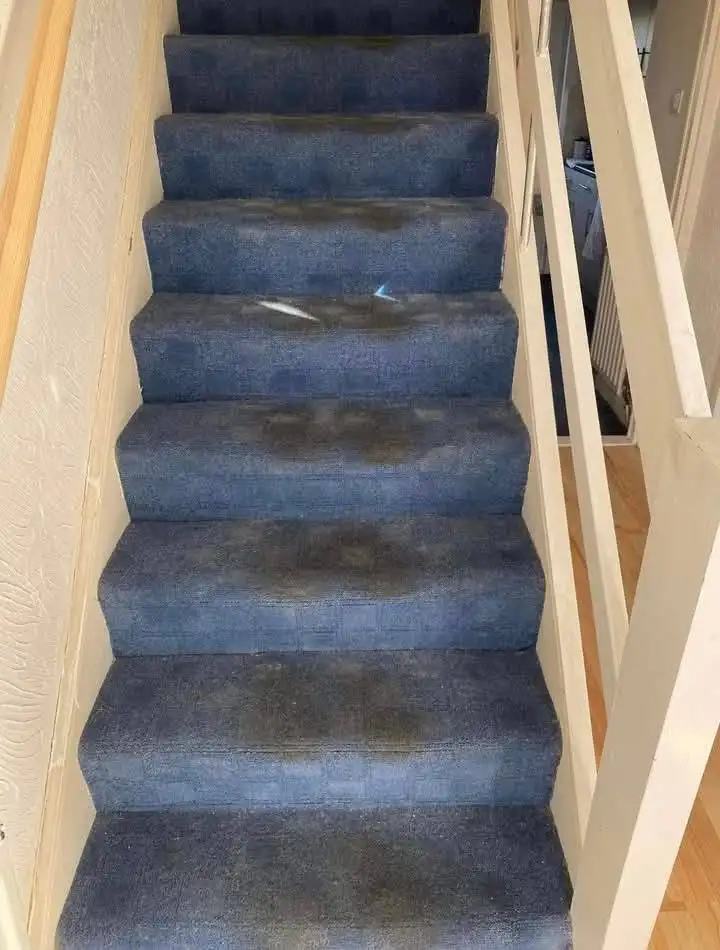
The single biggest misunderstanding about upholstery and carpet is that the problem is stains. It usually is not. The bulk of what comes out of a sofa or a carpet is dry particulate — skin, hair, fibre, city dust, garden grit — sitting at the base of the pile.
That matters because dry soil is abrasive. Every time somebody sits down or walks across a room, grit grinds against fibre. A carpet does not just look dirty as it ages; it is being physically sanded from underneath, and that wear is permanent.
It also dictates the method. Dry soil comes out with a vacuum. Introduce water first and you have made mud, and driven it deeper. This is why the vacuuming stage takes longer than people expect, and why skipping it is the most common corner cut in the trade.
The bound layer needs chemistry, not pressure
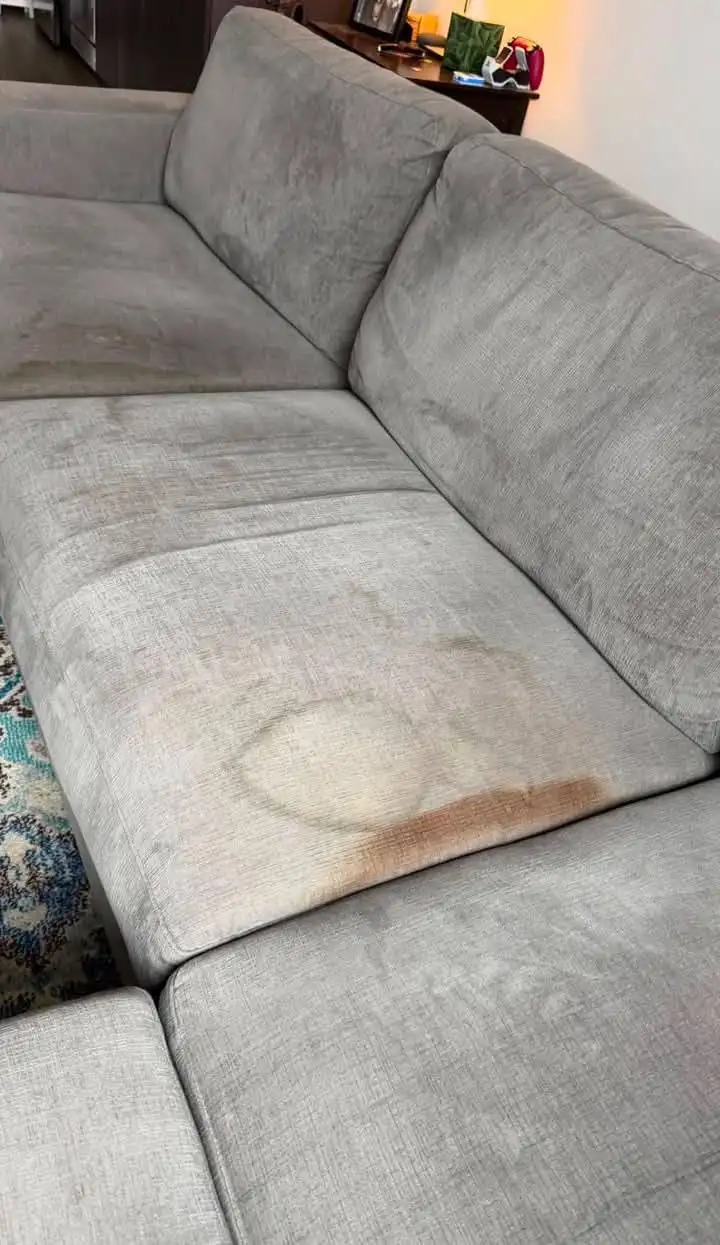
What is left after vacuuming is the oily layer: body oils, cooking residue, hair product, traffic film. That is genuinely bonded to the fibre, and no amount of scrubbing or water pressure will shift it directly.
It has to be chemically released first, with an alkaline pre-spray that needs time to work — usually eight to ten minutes of dwell. Rushing that is why a hurried job looks acceptable while it is wet and disappointing once it dries.
Then take out more than you put in
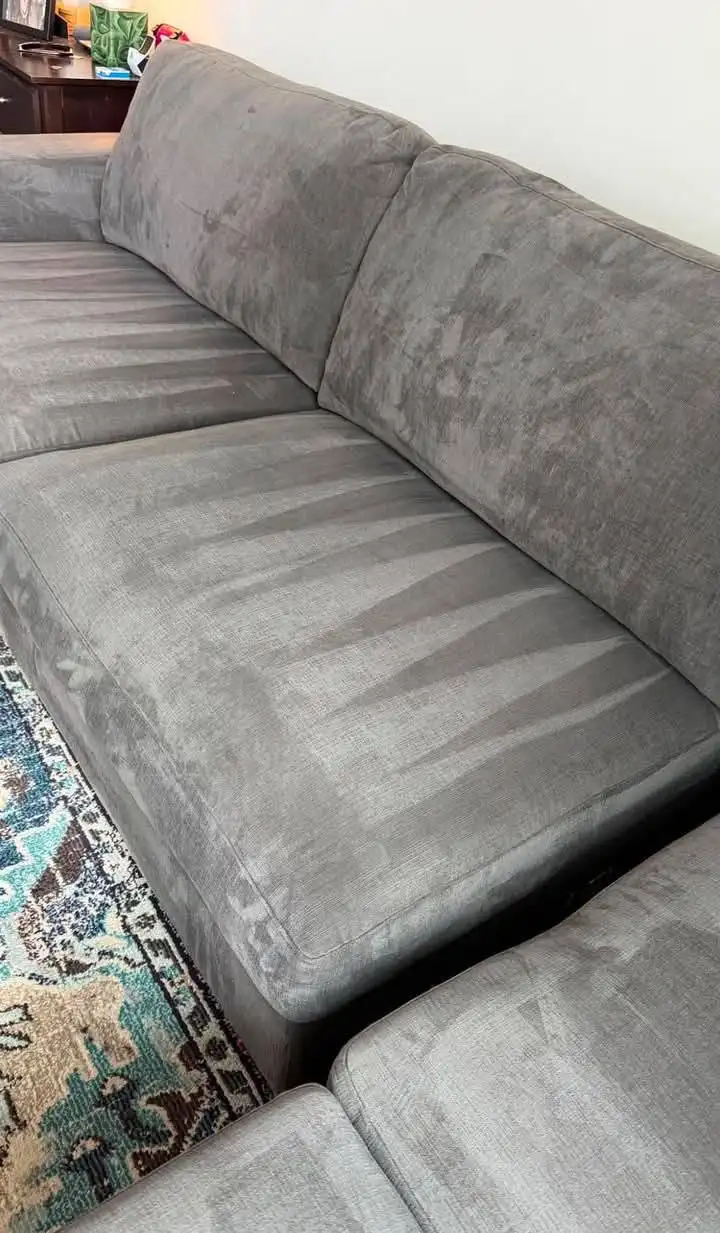
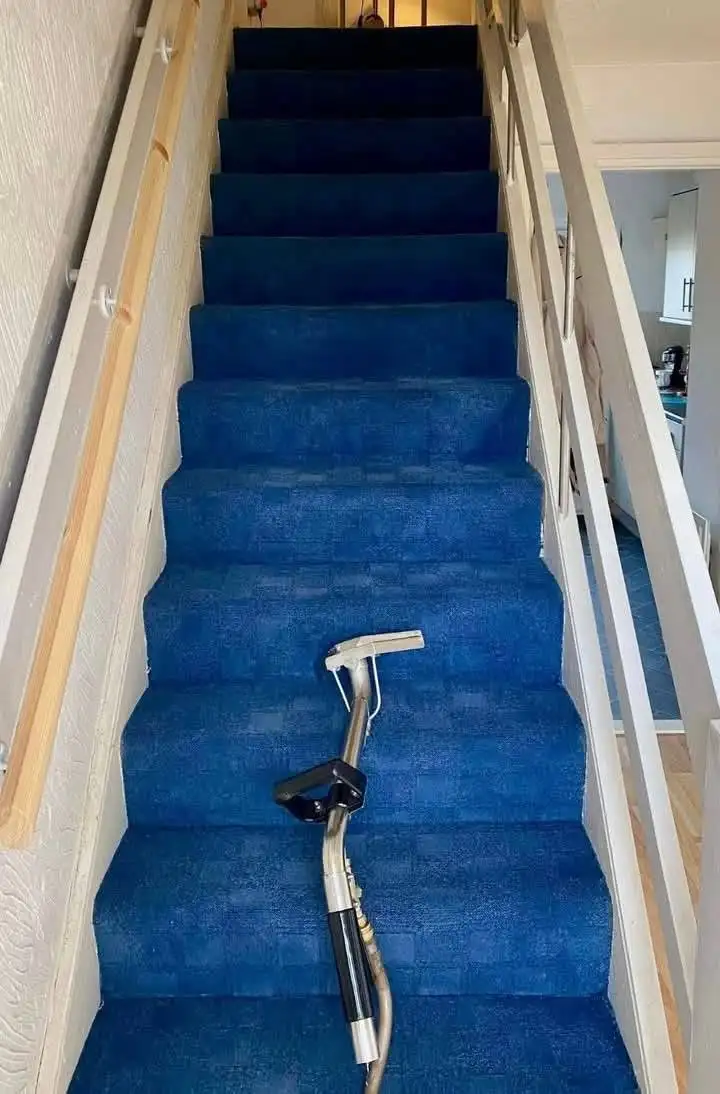
Extraction is the part people picture, and it is the least complicated. Hot solution goes in under pressure, dirty solution comes straight back out. The skill is restraint: the target is the least moisture that will do the job, followed by dry passes that recover considerably more than went in.
Over-wetting causes nearly every post-clean complaint we get called to fix — browning as soil wicks up from the foam, shrinkage on natural fibres, damp underlay, and a musty smell that appears two days later.
How we clean
The seven steps
Every job, domestic or commercial, runs through all seven in this order.
- 01
Fibre test before anything else
We check the cleaning code, identify the fibre and test colourfastness on a hidden seam. This is the step that decides the method — and the step that prevents shrinkage, dye bleed and crushed pile.
- 02
Dry soil removal
A HEPA-filtered vacuum lifts the grit, hair and dust sitting at the base of the pile. Skip it and water turns that grit into mud and drives it deeper. Most of the weight we remove comes out at this stage, dry.
- 03
Pre-spray and dwell
An alkaline pre-spray breaks the bond between oily soil and the fibre. It needs time to work — usually eight to ten minutes. Rushing the dwell is why a fast clean looks fine wet and disappointing dry.
- 04
Agitation
Soft-brush or hand-tool agitation gets the solution through the full depth of the fibre and loosens what the pre-spray has released. Gentle on velvet and wool, firmer on polypropylene and heavy traffic lanes.
- 05
Hot water extraction
High-temperature rinse in, dirty solution straight back out. We put in the least moisture that will do the job and recover far more than we put in, because over-wetting causes browning, shrinkage and slow drying.
- 06
Spot and odour work
Anything still visible gets its own treatment matched to the stain type — tannin, protein, dye or oil. Odour is treated at the source with an enzyme, not covered with fragrance.
- 07
Groom and dry
The pile is groomed so it dries in one direction and the tone stays even. Air movers cut drying to a fraction of the time. Upholstery is usually dry in three to five hours, carpet in two to four.
If a fabric cannot be cleaned safely, we say so on the doorstep and do not charge you.
Read the full method
What we will not do
- Clean a fabric we cannot safely identify. We test first, and if the answer is no, we say so on the doorstep and do not charge for the visit.
- Promise a stain will disappear when we think it will only reduce. You will get the honest version before you book.
- Mask an odour with fragrance and call it odour removal. If the source cannot be reached, we will tell you what it would actually take.
- Use heat on a protein stain, or bleach on a coloured fabric, to get a quick result that damages the piece.
- Leave a job so wet that it is still damp the next day.
Read more on the detail
- Cleaning codes W, S, WS and XThe one-letter tag under your seat cushion decides everything. Here is how to read it.
- Red wine on a sofaThe first ten minutes decide the outcome. Most of what people do in them is wrong.
- Sofa drying timesThree to five hours for upholstery, two to four for carpet. Here is what changes that.
- Pet odour removalFragrance lasts a fortnight. Here is what removes a smell rather than covering it.
- How often to clean a sofaEvery 12–18 months for a busy home. Waiting five years costs more and recovers less.
- Tenancy deposits & carpetsWhat agents can require, what counts as fair wear and tear, and the receipt that settles it.
Questions
Questions about the method
What is the difference between steam cleaning and hot water extraction?
In practice they are the same thing, and "steam cleaning" is a slight misnomer. Hot water extraction sprays hot water and cleaning solution into the fibre under pressure and immediately vacuums it back out. It is not steam in the true sense — actual steam would be too hot for most upholstery.
When do you use a low-moisture method instead?
On velvet, viscose blends, silk, some linens, S-coded fabrics, and anything that fails a moisture test on a hidden seam. It costs the same. The choice is made after testing the fabric, not before.
Do you use chemicals?
Yes — cleaning is chemistry, and anyone claiming otherwise is selling something. What matters is which ones and whether they are rinsed out. We use pH-balanced, low-odour products chosen for the fibre, and the rinse step is the one that makes them safe around children and pets.
Why does the order of the steps matter so much?
Because most failures in this trade are sequencing failures. Wetting before vacuuming turns dry grit into mud. Extracting before the pre-spray has dwelled leaves the oily bond intact. Skipping the drying passes causes browning and slow drying. The individual techniques are not secret; doing all of them, in order, every time, is the job.
Free estimate
Send us a photo. Get a straight answer.
A picture from the doorway is usually all we need to give you a price range. We settle the exact figure on the phone or on WhatsApp, and we will tell you honestly if something will not come out.
Every day, 8am – 8pm · Covering Greater London